
 Spanish
CONTACT US
info@bidaiondo.com




Tokenization: the key to security in digital payments
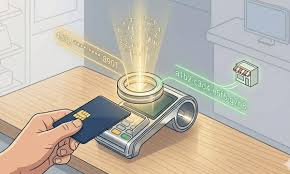
Digital payments are currently expanding rapidly, making the secure storage and processing of user card information a critical necessity. Tokenization is one of the most important technologies addressing this need. What is tokenization? In its simplest form, tokenization is the process of generating a "token" that replaces sensitive payment data (e.g., the card number). This token substitutes for the actual data, and transactions are conducted using this token. Thanks to this approach, card information is not stored directly on online merchants' systems. Especially in an environment where the volume of digital payments grows rapidly each year, this type of security solution is no longer an option, but a necessity. Why do merchants need tokenization? The main reasons why online merchants turn to tokenization technology are based on three pillars: security, regulation, and user experience. First, security. Data breaches have serious consequences for online businesses, both financially and reputationally. According to IBM's Cost of a Data Breach 2025 report, the average global cost of a data breach has exceeded $4.4 million. This clearly demonstrates how critical the protection of sensitive data is. Tokenization directly reduces this risk by moving credit card data outside of online retailers' systems. The second important aspect is regulation. Online retailers that operate with payment systems must comply with international security standards such as PCI-DSS. However, complying with these standards is both expensive and operationally complex. Tokenization significantly reduces these burdens by moving sensitive data to secure infrastructures. Thirdly, user experience is key. According to e-commerce research by the Baymard Institute, the average shopping cart abandonment rate in online purchases is around 70%. This high percentage highlights how critical friction is in the checkout process. The "one-click checkout" and "stored card" experience offered by tokenization reduces friction and increases conversion rates. How do tokenization solutions work in practice? In practice, tokenization functions not only as a tool for storing cards but also as an integral part of broader payment orchestration systems. Today, more and more online merchants are adopting this approach to avoid falling behind in terms of security and performance. This shift is redefining the standard compared to traditional payment providers. In this context, Craftgate offers a framework where, when a user enters their card details, this information is stored in a secure environment and a corresponding token is generated. Online merchants, in turn, only store this token on their own systems. This ensures security and facilitates recurring payments. In an environment where speed and trust directly impact conversion, lacking this type of infrastructure can become a competitive disadvantage. Furthermore, Craftgate's infrastructure includes an orchestration layer capable of intelligent routing between different acquirers and virtual POS terminals. Industry analysis shows that these intelligent routing and retry mechanisms can increase payment success rates by 5% to 15%. In an increasingly competitive market, even small increases in success rates can translate into a significant advantage. Tokenization enables these optimizations to operate sustainably. Benefits of Tokenization Tokenization is an indispensable part of modern payment systems. It minimizes security risks, reduces operational burden, and improves the user experience. The fact that card data is not stored directly by the online merchant provides strong protection against data breaches. It also facilitates regulatory compliance and reduces costs. From the user's perspective, it offers a faster and smoother payment experience, increasing customer satisfaction and fostering loyalty to online merchants that offer tokenization. Today, many large e-commerce platforms and fintech companies worldwide have standardized their tokenization infrastructure. Thanks to advanced platforms like Craftgate, this technology is no longer just a security solution but a strategic advantage for payment optimization and growth. Tokenization is positioned in the intersection between security and user experience, and will continue to play a central role in the future of the digital payments ecosystem.
Last news
Meta lleva WhatsApp Business a la era agéntica con un nuevo servidor MCP

Ya puedes añadir a tu Feed principal de Instagram las publicaciones en las que te hayan etiquetado

online trading systems.
 We show you the best way to market products and services online, through a professional service of installation, management and maintenance of your virtual store
We program to suit you
 We help you achieve operational excellence in all your business processes, whether they are production, logistics, service or office processes. In addition, we assure you to maintain continuous improvement in your management.
Bidaiondo Articles
Google's voice assistant, smarter and more agile thanks to the Gemini 3.8 Live and 3.8 Live Extended Thinking models
Real-time voice interaction with AI assistants is one of the areas where Google is focusing its efforts to offer a smoother user experience. Their latest advancement in this area is the recently announced Gemini 3.8 Live and Gemini 3.8 Live Extended Thinking models. These voice assistants, like their predecessors, allow for fluid, natural, and real-time voice conversations, but they stand out for their significant advancements in reasoning capabi...
You'll be able to buy the products you see on screen while watching a Prime Video series.

Amazon has just launched “Shop the Show,” a feature designed a year ago to allow viewers to purchase merchandise, clothing, or accessories featured in their favorite movies, TV shows, and sporting events in real time without pausing the main screen. How Shop the Show Works Surely you've watched a show and wondered where a character's outfit came from, like Ali's dress in Off Campus. Unlike other shoppable TV models that cl...
ABOUT US
FILES







Welcome to Bidaiondo, dear user
BIDAIONDO SL, as the party responsible for the website www.bidaiondo.com, uses its own operating cookies and those of third parties of an analytical nature to allow the use of the website, analyze our services and show you information related to your preferences based on a profile drawn up from of your browsing habits (for example: pages visited). Please bear in mind that, if you do not activate some types of cookies, such as operational and analytical cookies, your experience of using this website may be affected. You can obtain more information and configure your preferences in the CONFIGURE option that appears below, you can reject cookies in the REJECT AND CLOSE option or accept all cookies and continue browsing in the ACCEPT AND CLOSE option.
So do you want to know more?
Data privacy seems important to you, and it is to us too. We store cookie data for 13 months. If you want to know more, you can visit our pages Privacy Policy y Cookies policy. Do you know what cookies are? Cookies are files that are used by virtually all websites. When browsing our page, they are installed in your browser or device to ensure that the website works correctly and store information about your visit. The data provided by cookies treat the user anonymously and in no case do they store personal information.
The data collected by the cookies we use are:
- Addresses IP
- References of visited pages
- References of downloaded files
- The website itself www.bidaiondo.com
- https://www.moz.com
- https://secure/europeanssl.eu